

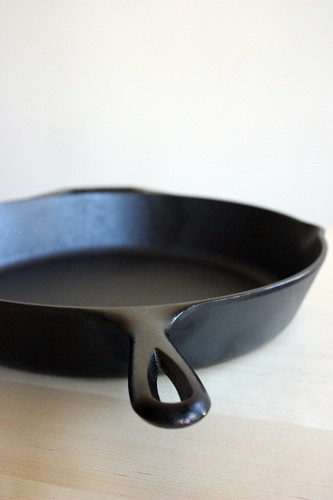
This weekend, I discovered the magic of cast iron cooking. I'm now hooked. I've been wanting to start cooking with cast iron for a few years now, and I even have an old cast iron skillet that I purchased at an antique store sitting in the bottom of my closet at my mom's house. I mean to bring it back to New York every time I visit home. Somehow, though, at the end of each trip, I talk myself out of lugging the hefty iron mass back across the U.S. in my suitcase, and the pan remains there, un-seasoned though not unloved, for another several months.
Enter Crate & Barrel. Mary and I have had a gift certificate from there burning a hole in our pockets ever since we moved into our apartment, and we finally got into the city to shop this weekend. With it, we picked up a french press for making coffee and herbal infusions, the Baked cookbook (oh yum), and a sizeable, pre-seasoned cast iron skillet.
After a day of cooking together, my skillet and I are tight. It has far more benefits than I previously thought. My original desire for a cast iron pan was born from a need for cookware that could go from stovetop to oven, as we previously had none. That was only scratching the surface of this pan's great qualities. Cooking with cast iron is actually an excellent way to add iron to your diet, a nutrient which almost fifty percent of Americans, mostly women, lack. In addition, cast iron that has been seasoned is naturally non-stick and does not contain any of the carcinogens in modern non-stick cookware. Add to these qualities that it conducts and retains heat beautifully, and you can understand why I'm smitten.
So why isn't cast iron cookware more popular today? It's cheap, versatile, health-promoting, and makes delicious food. The thing about cast iron cookware is that it can last multiple lifetimes if you care for it properly. For marketers, this is a downside, because it means they sell fewer pans. For the rest of us, this is great. As long as you practice some routine maintenance, you can enjoy a lifetime of happiness with your new pan.
Unless the cast iron pan you buy is pre-seasoned, you must season it yourself before use. Calm down: it's not hard. Mark Bittman gives simple instructions here. You are then ready to cook. After cooking, just remember not to wash with soap. I use hot water and a hard-bristled brush to scrape off any left-behind food. Note that while most cast iron enthusiasts warn against using soap on your cast iron, others swear a mild soap is fine and, at worst, will only cause you to have to re-season it before the next use. After washing, dry the pan immediately to prevent rust and apply a thin coat of oil such as grape seed or coconut to the cooking surface, wiping away any excess. Store your cookware in a dry place, and you can look forward to a long and happy life together.
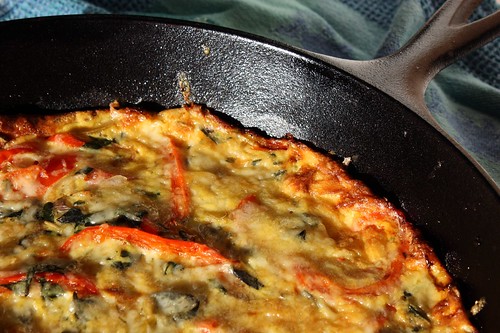
Now that cast iron has found its way into our home, I was finally able to make this frittata that I've been lusting after. I don't need to give you the recipe, as Tea has provided an excellent one here, which you can alter to your liking.
-Kylie


 You see, Mary and I decided to get through this summer without the help of an air conditioner. We had several reasons for this decision. Fresh air is lovely. Air conditioners are expensive. They're not energy efficient. We don't have that many windows, and we don't want to block out light with a bulky window unit. And also, secretly, it makes us (or at least me) feel rather proud to think that we're living without the modern luxury of that quickly-cooled air. Call me crazy; I probably am.
 The result of this decision, however, is that we sleep on top of the sheets and blankets with a strong fan blowing directly on our sticky bodies. I often find myself padding to the freezer after a few hours of tossing and turning to retrieve an ice pack, which I then tote back to bed with me wrapped in a towel and grasp as if I'm an inconsolable toddler and it is my security blanket. Not to worry; that always does the trick. I fall asleep in minutes, lulled into slumber by the coolness of the melting bundle in my arms.
 While I may be wilting in the heat, we've just got to revel in summer while it's here. So soon, it will be gone for another year.

